
Siemens controllers have earned a prominent place in New Zealand’s industrial landscape as the backbone of modern automation solutions. From manufacturing to infrastructure and from food processing to water management, Siemens controllers enable New Zealand businesses to achieve high levels of efficiency, safety, and reliability. With cutting-edge technology, scalability, and a global reputation for engineering excellence, Siemens continues to shape the future of automation in New Zealand.
Advancing Automation Across Industries
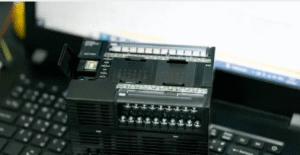 In New Zealand, a country renowned for its robust agricultural, food production, and energy sectors, the need for reliable and adaptable automation systems is substantial. Siemens controllers provide versatile solutions that cater to a diverse range of industries, enabling businesses to streamline their operations and reduce operational costs.
Whether it’s a dairy processing facility in Waikato, a water treatment plant in Christchurch, or a packaging line in Auckland, Siemens controllers are at the heart of reliable and adaptive automation systems. Their integration across multiple industrial segments illustrates the technology’s versatility and growing demand in the New Zealand market.
Types of Siemens Controllers Used in New Zealand
Siemens offers a comprehensive portfolio of programmable logic controllers (PLCs), including the S7 series, which are commonly deployed across New Zealand industries. Each model is tailored to different levels of complexity and scale:
- S7-1200: Ideal for compact automation tasks in small to mid-sized plants. Many New Zealand manufacturers use the S7-1200 for machinery automation due to its intuitive engineering and strong communication capabilities.
- S7-1500: A high-performance controller used in complex automation environments. The S7-1500 is favoured for its advanced diagnostics, integrated safety features, and real-time control capabilities, making it ideal for critical applications in the energy or infrastructure sectors.
- ET 200SP: A distributed controller perfect for modular automation, offering flexibility for decentralised systems often seen in water and wastewater treatment facilities across the country.
These Siemens controllers are not only powerful but also fully compatible with the TIA (Totally Integrated Automation) Portal, Siemens’ engineering framework that unifies all automation tasks—from planning and commissioning to diagnostics and maintenance.
Enhancing Sustainability and Efficiency
Sustainability is a critical concern for New Zealand, and Siemens controllers play a vital role in promoting energy efficiency and resource management. In facilities such as solar farms, wind power stations, and smart buildings, these controllers help monitor and optimise energy consumption, automate responses to environmental data, and seamlessly integrate renewable energy systems.
For instance, in agriculture—a significant part of New Zealand’s economy—Siemens controllers are instrumental in automating irrigation systems, regulating fertiliser distribution, and managing livestock facilities, leading to increased productivity while minimising waste and environmental impact.
Supporting the Digital Transformation
The industrial sector in New Zealand is undergoing a digital transformation, and Siemens controllers play a pivotal role in enabling this shift. With built-in IoT capabilities, cloud connectivity, and edge computing functions, these controllers provide real-time data insights that empower decision-making and predictive maintenance.
By connecting Siemens controllers to cloud platforms such as MindSphere, New Zealand businesses gain access to advanced analytics, enabling them to anticipate failures before they occur, extend equipment life, and enhance overall system performance.
This level of digitisation is especially valuable for remote operations, such as those found in New Zealand’s mining and forestry sectors, where on-site human intervention is limited, and efficiency must be monitored and controlled remotely.
Local Expertise and Technical Support
A key reason for the growing adoption of Siemens controllers in New Zealand is the strong network of local partners, system integrators, and certified distributors who provide implementation and after-sales support. Siemens has established solid relationships with New Zealand-based engineering firms that offer training, commissioning, and maintenance services tailored to local needs.
Furthermore, Siemens New Zealand offers direct support and consultation to businesses seeking to modernise their automation infrastructure, ensuring that projects are delivered with minimal disruption and maximum return on investment.
Conclusion:
Siemens controllers in New Zealand are not just products—they are enablers of progress. Their adaptability, digital integration, and support for sustainable practices make them an invaluable component in the nation’s automation journey. As businesses seek more innovative, more efficient, and resilient systems, Siemens continues to deliver solutions that not only meet current operational needs but also pave the way for future innovation.
For industries across New Zealand, investing in Siemens controllers means investing in reliability, technological leadership, and a future-proof automation strategy.